

LEADERSHIP
The Leadership Edge
Going Beyond Management to Maximize Impact
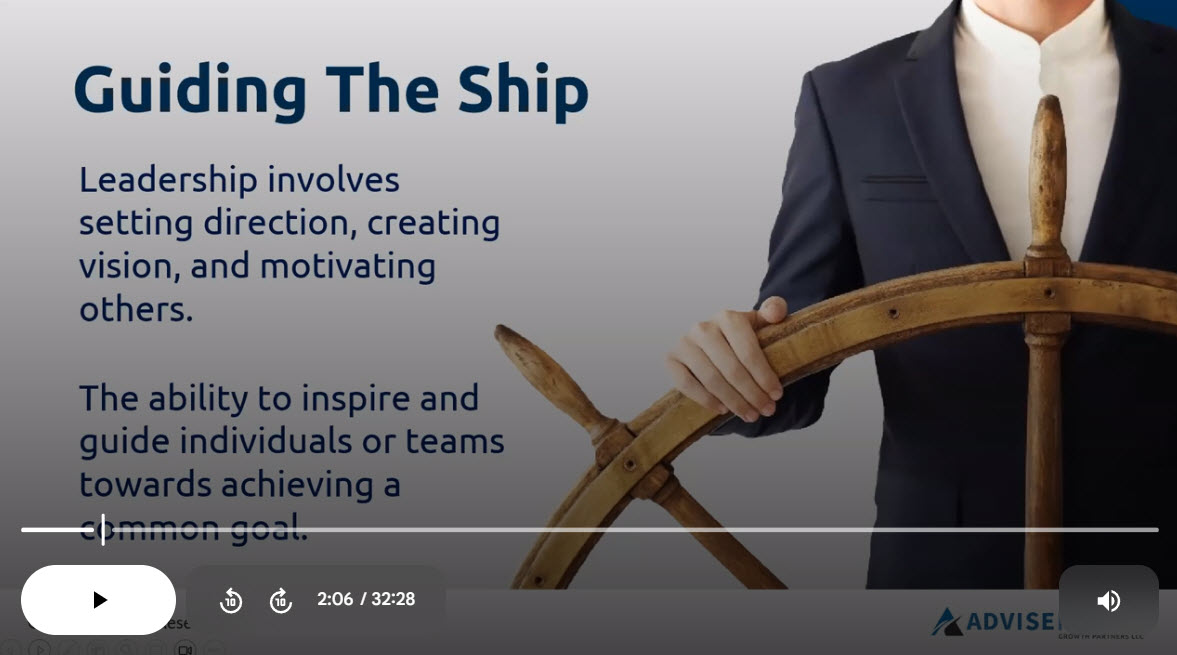
Guiding The Ship
Watch The Leadership Masterclass Now.
Leadership involves setting direction, creating vision, and motivating others. The ability to inspire and guide individuals or teams towards achieving a common goal.
LEADING THE WAY
THE LEADERSHIP BLUEPRINT
A STEP-BY-STEP GUIDE FOR LEADERSHIP
Leadership is not just about authority or decision making; it is about guiding others, fostering innovation, and building relationships that drive success. Great leaders create environments where individuals can thrive, teams can collaborate effectively, and organizations can scale new heights.
Leadership is both an art and a science – it requires a blend of vision, strategic thinking, emotional intelligence, and a deep commitment to people and purpose.
LEADING WITH IMPACT
WINNING PRACTICES TO ALIGN VISION, PERFORMANCE, & GROWTH
This white paper explores the critical role of leadership and management and emphasizes that effective leadership is crucial for success in today’s fast-paced business world, going beyond traditional management functions to inspire teams, drive innovation, and navigate complexities.
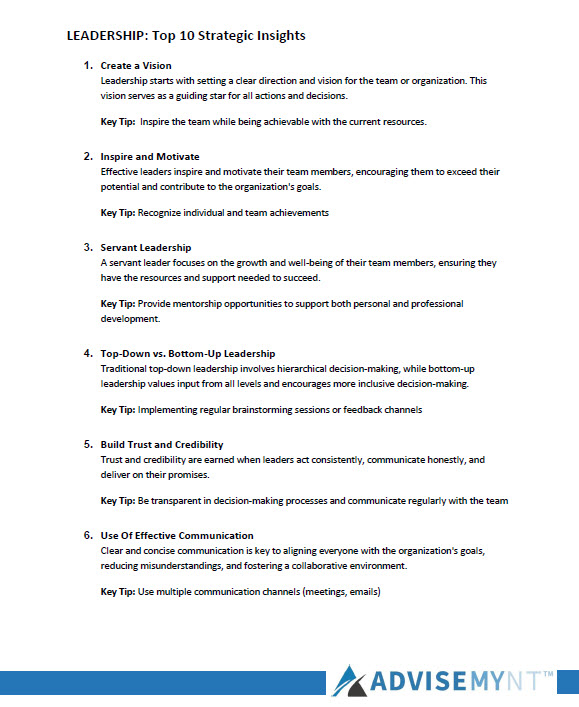
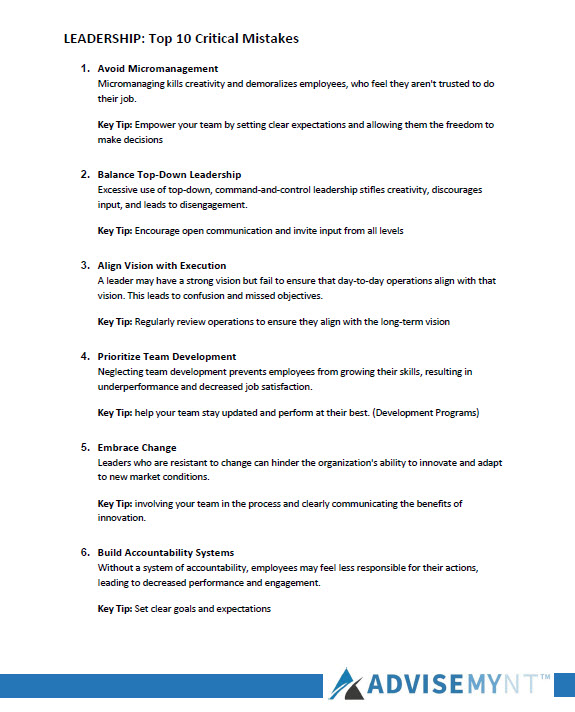
LEADERSHIP DO'S & DON'T'S
LEADERSHIP ARTICLES
Understanding Change Management
Change management refers to the structured approach to transitioning individuals, teams, and organizations from a current state to a desired future state. This process involves preparing, supporting, and helping individuals to make organizational change. According to a study by McKinsey & Company, organizations that excel in change management are more likely to achieve their objectives and realize their desired outcomes. Leadership is integral to this process. Leaders are the ones who set the vision for change, communicate the need for it, and motivate their teams to embrace new ways of working. Without effective leadership, change initiatives can falter, leading to resistance, confusion, and ultimately, failure.
The Importance of Talent Acquisition
In an increasingly dynamic business environment, organizations must identify and secure the right talent to achieve their goals. Effective talent acquisition aligns recruitment efforts with the organization’s mission and values, ensuring that new hires not only possess the requisite skills but also fit well within the company culture. According to research by the Society for Human Resource Management (SHRM), organizations with effective talent acquisition strategies are 2.5 times more likely to outperform their competitors. An organization’s ability to attract top talent directly impacts its performance, innovation, and overall success. High-performance teams, comprised of skilled individuals who work well together, can drive significant results. Therefore, leaders must prioritize talent acquisition as a strategic imperative rather than just a human resources function.
The Costs of Turnover
High turnover rates can be detrimental to an organization, leading to increased recruitment costs, decreased productivity, and lower morale. The U.S. Bureau of Labor Statistics estimates that the average cost of replacing an employee can be as high as 30% of their annual salary, factoring in recruitment, training, and lost productivity during the transition period. Moreover, frequent turnover can disrupt team dynamics, leading to decreased collaboration and engagement among remaining staff.
The Strategic Role of Human Resources
Human resources play a vital role in managing an organization’s most valuable asset: its people. A well-structured HR function not only handles recruitment and compliance but also aligns workforce management with broader business goals. This alignment is crucial for ensuring that the right talent is in place to drive success.
According to the Harvard Business Review, organizations that effectively integrate HR with business strategy can outperform their competitors. This integration allows organizations to respond swiftly to market demands, maintain a competitive edge, and enhance overall productivity. Leaders who prioritize HR as a strategic partner contribute significantly to their organization’s long-term success.
The Foundation of Effective Leadership
Personal development is a cornerstone of effective leadership. In an era where change is the only constant, leaders must be adaptable, self-aware, and committed to continuous growth. Those who prioritize their personal development not only enhance their own skills but also inspire and guide their teams more effectively. This article explores the significance of personal development in leadership and provides strategies for continuous growth.
Understanding Organizational Culture
In today’s rapidly changing business landscape, organizational culture has emerged as a critical factor influencing overall performance and employee satisfaction. It acts as the invisible hand that guides employee behavior, shapes company policies, and determines how organizations respond to challenges and opportunities. Leadership plays a pivotal role in shaping this culture, creating an environment where values, beliefs, and practices align with the organization’s goals. This article explores how effective leadership can transform organizational culture and foster a thriving workplace.