

Operations
Making It Happen
From Chaos to Control
Transforming Business Operations for Sustained Growth Success
Operations From Chaos to Control
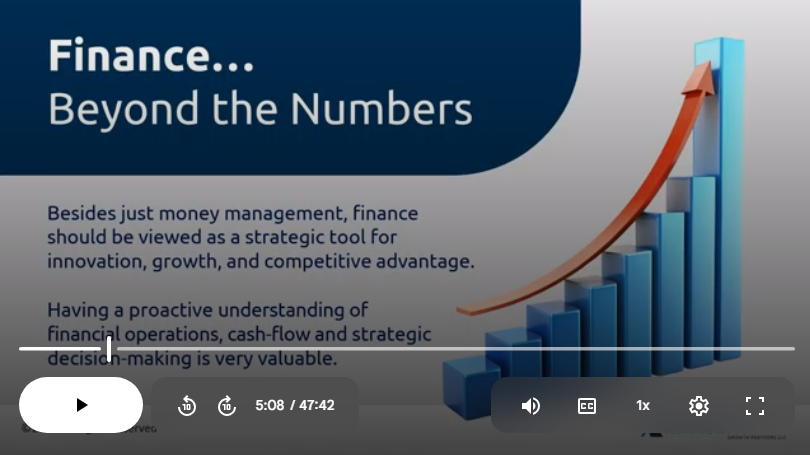
Watch The Operations Masterclass Now.
Streamlined operations boost efficiency, reduce costs, and amplify client satisfaction – creating a foundation for sustainable growth. Optimize people, finances, and time to align with business priorities and client expectations.
MAKING IT HAPPEN

THE OPERATIONS PLAYBOOK
A STEP-BY-STEP GUIDE FOR OPERATIONS
Effective business operations are the foundation of long term success. While many organizations focus on growth through sales and marketing, the ability to scale and sustain that growth depends on well-structured, efficient, and adaptable operations. Without streamlined processes, businesses risk inefficiencies, misallocated resources, and operational bottlenecks that stifle performance and profitability.
The Operations Advantage
Operations: The Backbone of Value Creation
At the core of any successful business lies a well structured operational framework. Effective operations ensure that organizations can consistently deliver high quality products and services while managing resources efficiently. When operations are optimized, businesses experience lower costs, increased productivity, and stronger market positioning. Operational excellence is not simply about cutting costs—it’s about maximizing output while maintaining superior service delivery.
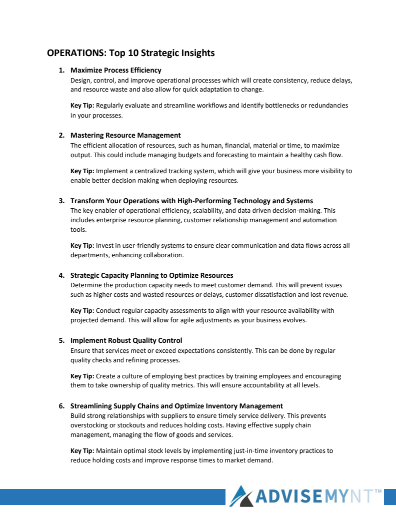
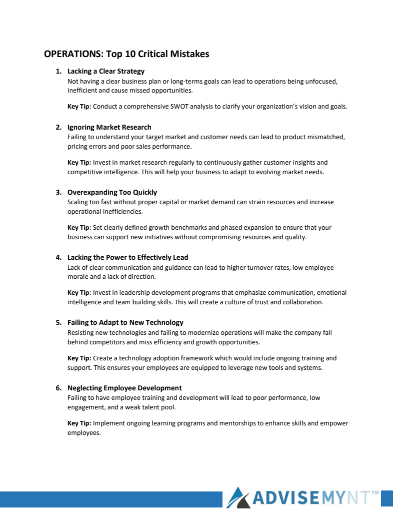
Operations DO'S & DON'T'S
Operations ARTICLES
A Key to Success for B2B Professional Service Firms
In the competitive arena of business-to-business (B2B) professional services, effective operations management is essential for small to medium-sized enterprises (SMEs) aiming for growth and sustainability. As the backbone of any service-oriented business, streamlined operationsm not only enhance efficiency but also improve client satisfaction, ultimately leading to increased profitability. Here, we explore key strategies for optimizing operations that can make a significant impact on your firm’s success.
Understanding Supplier Management in the Service World
Supplier management for B2B service businesses is not about stacking goods in a warehouse; it is about building reliable relationships with the partners and vendors who provide the tools, software, and expertise you need to run your business. From cloud storage providers to independent contractors, every supplier is a crucial cog in your operational machine.
Optimizing Resource Management for B2B Professional Service Firms
In today’s competitive landscape, effective resource management is crucial for small to medium-sized business-to-business (B2B) professional service firms. With limited resources and increasing client expectations, firms must find ways to optimize their use of time, talent, and technology. This article delves into the importance of resource management, highlights common challenges, and offers practical strategies for enhancing resource efficiency.
The Understanding the Foundation of Quality Control
For small B2B professional service businesses, quality control starts with clarity. This means defining what quality looks like for your business. Service delivery in a B2B context often involves complex, multi- step processes that span weeks or months. For each stage, clear expectations must be set to ensure that the work aligns with client goals and your internal benchmarks. Establishing these standards is the first step in embedding quality into your operations.
Operations Performance Metrics and Reporting for Small B2B Professional Service Businesses
Measuring and reporting on operations performance is crucial for small B2B professional service businesses. While these businesses often focus on client acquisition, service delivery, and customer relationships, maintaining operational efficiency is what keeps the engine running smoothly behind the scenes. Without clear performance metrics and effective reporting, small business owners might overlook inefficiencies or miss opportunities for improvement, both of which can impact profitability and long-term growth.
Understanding Process Management
At its core, process management involves the planning, monitoring, and optimization of a firm’s workflows and operations. It encompasses every aspect of how work gets done, from client onboarding and project execution to invoicing and feedback collection. Effective process management enables firms to identify inefficiencies, reduce waste, and ensure that each step in a workflow adds value.
The Power of Technology in Professional Services
As client expectations rise, the demand for seamless, efficient service delivery becomes paramount. Technology provides solutions that can elevate operational performance and client satisfaction. Implementing robust systems allows firms to manage projects, track resources, and analyze data with unprecedented ease. This shift not only improves internal processes but also enhances client interactions, fostering loyalty and trust.
Understanding Capacity Planning
Capacity planning involves forecasting future demand for products or services and determining the resources needed to meet that demand. This includes assessing workforce capabilities, equipment availability, and overall operational capacity. The goal is to align these elements to ensure that the organization can respond swiftly and effectively to market changes.